Ever been asked a question that felt like a trap? Knowing the Best Responses to Stay Out of Trouble can help you handle awkward conversations, avoid unnecessary conflict, and keep things light without saying the wrong thing.
The truth is, we’ve all been there. Whether it’s a tricky question from a friend, a playful challenge from a partner, or a loaded comment at work, finding the right response in the moment isn’t always easy. And here’s the kicker: one careless answer can sometimes create more problems than you expected.
But don’t worry—there’s a smarter way to navigate these situations.
In this guide, you’ll discover the Best Responses to Stay Out of Trouble, including witty comebacks, diplomatic replies, and clever phrases that help you defuse tension while keeping the conversation moving. Even better, you’ll learn when to use each type of response for maximum effect.
So, if you’d like to think faster on your feet and avoid common conversational pitfalls, you’re in the right place. Let’s dive in.
I Understand Your Point
During a team meeting, a colleague became frustrated because they felt their ideas were being ignored. Instead of immediately defending yourself, you acknowledge their perspective. This simple response helps lower tension and shows emotional intelligence. It allows the conversation to continue productively rather than turning into an argument.
Example: “I understand your point, and I can see why you feel that way.”
Best Use: When someone feels unheard or misunderstood.
Explanation: It validates the other person’s perspective without necessarily agreeing with them.
When Not to Use: If you genuinely don’t understand the issue and need clarification first.
Let Me Think About That
A friend asks for an immediate answer regarding a sensitive matter. Rather than responding impulsively, you take time to consider the situation. This response prevents misunderstandings and allows you to make a thoughtful decision.
Example: “Let me think about that before I respond.”
Best Use: During important decisions or emotional discussions.
Explanation: It gives you time to evaluate the situation calmly.
When Not to Use: When an urgent answer is genuinely required.
I Appreciate Your Feedback
Your manager points out an area where your performance could improve. Instead of becoming defensive, you thank them for their input. This demonstrates professionalism and a willingness to grow.
Example: “I appreciate your feedback and will consider it carefully.”
Best Use: Receiving constructive criticism.
Explanation: It shows maturity and openness to improvement.
When Not to Use: If the feedback is clearly abusive or disrespectful.
That Wasn’t My Intention
A joke you made accidentally offended someone. Rather than arguing about your motives, you explain that causing harm wasn’t your goal. This helps repair the situation.
Example: “That wasn’t my intention, and I’m sorry it came across that way.”
Best Use: When your actions have been misunderstood.
Explanation: It clarifies intent while acknowledging the other person’s feelings.
When Not to Use: As an excuse to avoid accountability.
Let’s Find a Solution
Two coworkers disagree about how to complete a project. Instead of focusing on blame, you shift attention toward solving the problem.
Example: “Let’s find a solution that works for everyone.”
Best Use: Workplace conflicts and team discussions.
Explanation: It encourages collaboration.
When Not to Use: When the issue requires accountability before problem-solving.
I Respect Your Opinion
During a debate, both sides have strong viewpoints. This response shows respect even when disagreements remain.
Example: “I respect your opinion, even though I see things differently.”
Best Use: Differences in beliefs or preferences.
Explanation: It reduces hostility and promotes respectful dialogue.
When Not to Use: When harmful misinformation needs correction.
Can We Discuss This Calmly?
A conversation begins becoming heated. You encourage a calmer approach before emotions escalate further.
Example: “Can we discuss this calmly so we can understand each other better?”
Best Use: Emotional disagreements.
Explanation: It helps de-escalate tension.
When Not to Use: If the other person is already calm.
I May Have Misunderstood
A misunderstanding creates confusion between two people. Instead of assigning blame, you acknowledge the possibility that you interpreted something incorrectly.
Example: “I may have misunderstood what you meant.”
Best Use: Clarifying confusing situations.
Explanation: It promotes accountability and openness.
When Not to Use: When facts are already clear.
Thank You for Letting Me Know
Someone informs you about a mistake or concern. Rather than reacting negatively, you express gratitude for the information.
Example: “Thank you for letting me know.”
Best Use: Receiving updates or corrections.
Explanation: It keeps communication positive.
When Not to Use: If a more detailed response is required immediately.
I Will Look Into It
A customer reports an issue with a service. Instead of making promises you cannot keep, you commit to investigating the matter.
Example: “I will look into it and get back to you.”
Best Use: Handling complaints and concerns.
Explanation: It demonstrates responsibility.
When Not to Use: If you already know the answer.
Let’s Focus on the Facts
A discussion becomes emotional and filled with assumptions. Redirecting attention to objective information helps maintain fairness.
Example: “Let’s focus on the facts before making conclusions.”
Best Use: Disputes and disagreements.
Explanation: Encourages logical thinking.
When Not to Use: When emotional support is the primary need.
I See Where You’re Coming From
A friend explains their concerns about a decision you made. By acknowledging their viewpoint, you keep the discussion constructive.
Example: “I see where you’re coming from.”
Best Use: Sensitive conversations.
Explanation: Demonstrates empathy.
When Not to Use: If it sounds insincere.
I’d Rather Not Assume
Rumors begin circulating about a situation. Instead of joining speculation, you choose caution.
Example: “I’d rather not assume until we know more.”
Best Use: Uncertain situations.
Explanation: Prevents misunderstandings.
When Not to Use: When verified facts already exist.
Let’s Clarify Things First
Conflicting information causes confusion among team members. Clarification becomes necessary before moving forward.
Example: “Let’s clarify things first before making decisions.”
Best Use: Miscommunication scenarios.
Explanation: Ensures accuracy.
When Not to Use: When details are already clear.
I Want to Understand Better
Someone shares a concern that you don’t fully grasp. Instead of arguing, you ask for additional explanation.
Example: “I want to understand better. Can you explain more?”
Best Use: Learning another person’s perspective.
Explanation: Encourages meaningful conversation.
When Not to Use: If the discussion has already been thoroughly explained.
That’s a Fair Point
A coworker raises a valid concern during a discussion. Recognizing their contribution strengthens cooperation.
Example: “That’s a fair point and worth considering.”
Best Use: Collaborative conversations.
Explanation: Shows respect for good ideas.
When Not to Use: If the point is inaccurate.
We Can Work This Out
A disagreement threatens a friendship or partnership. Reassuring the other person helps maintain trust.
Example: “We can work this out together.”
Best Use: Resolving conflicts.
Explanation: Builds confidence in a positive outcome.
When Not to Use: If the issue requires immediate boundaries.
I’ll Take Responsibility for My Part
A project encounters problems, and everyone contributed to the mistake. Accepting your role demonstrates integrity.
Example: “I’ll take responsibility for my part in this.”
Best Use: Accountability situations.
Explanation: Builds credibility and trust.
When Not to Use: When you are being unfairly blamed.
Let’s Avoid Jumping to Conclusions
An unexpected situation leads people to make assumptions. You encourage patience until more information becomes available.
Example: “Let’s avoid jumping to conclusions.”
Best Use: Rumors and uncertain situations.
Explanation: Promotes fair judgment.
When Not to Use: When evidence is already clear.
I Prefer to Keep Things Positive
A conversation starts becoming unnecessarily negative. You redirect the tone toward a more productive discussion.
Example: “I prefer to keep things positive and productive.”
Best Use: Workplace and social settings.
Explanation: Encourages healthier communication.
When Not to Use: When serious concerns need direct attention.
I’ll Learn From This Experience
A mistake creates an opportunity for growth. Rather than dwelling on failure, you focus on improvement.
Example: “I’ll learn from this experience moving forward.”
Best Use: After making mistakes.
Explanation: Shows maturity and growth.
When Not to Use: If immediate corrective action is still needed.
Let’s Agree to Disagree
After a respectful discussion, neither side changes their position. Ending the debate peacefully becomes the best option.
Example: “Let’s agree to disagree and move on respectfully.”
Best Use: Persistent differences of opinion.
Explanation: Prevents unnecessary conflict.
When Not to Use: When important decisions still need resolution.
I Appreciate Your Patience
A delay or misunderstanding has inconvenienced someone. Acknowledging their patience helps maintain goodwill.
Example: “I appreciate your patience while we sort this out.”
Best Use: Delays and service-related issues.
Explanation: Shows gratitude and respect.
When Not to Use: As a substitute for meaningful action.
Let’s Revisit This Later
Emotions are running high, making productive discussion difficult. Taking a break allows everyone to regain perspective.
Example: “Let’s revisit this later when we can discuss it calmly.”
Best Use: Heated conversations.
Explanation: Prevents impulsive reactions.
When Not to Use: During urgent situations.
I Value Our Relationship
A disagreement risks damaging an important connection. You remind the other person that the relationship matters more than the argument.
Example: “I value our relationship and want to resolve this respectfully.”
Best Use: Family, friendships, and workplace relationships.
Explanation: Reinforces mutual respect.
When Not to Use: In manipulative or toxic situations.
I’m Open to Suggestions
During a planning session, a teammate proposes a different approach than the one you had in mind. Instead of dismissing their idea, you show willingness to listen. This response creates a collaborative atmosphere and prevents unnecessary disagreements before they begin.
Example: “I’m open to suggestions if you have a better idea.”
Best Use: Teamwork, brainstorming sessions, and group projects.
Explanation: It demonstrates flexibility and encourages constructive input.
When Not to Use: When a decision has already been finalized.
Let’s Take It One Step at a Time
A complex problem starts overwhelming everyone involved. Rather than panicking, you suggest breaking the issue into manageable parts. This approach helps people focus on solutions instead of becoming frustrated.
Example: “Let’s take it one step at a time and work through it.”
Best Use: Stressful situations and large projects.
Explanation: Reduces pressure and promotes clear thinking.
When Not to Use: When immediate action on the entire issue is required.
I Can See Why You Feel That Way
A friend shares their frustration about a misunderstanding. Instead of arguing, you acknowledge their emotions and perspective. This often helps people feel respected and heard.
Example: “I can see why you feel that way.”
Best Use: Emotional conversations and relationship conflicts.
Explanation: Shows empathy without necessarily agreeing.
When Not to Use: If the person is seeking a factual answer rather than emotional validation.
Let’s Keep an Open Mind
A group discussion becomes divided because people are committed to their own opinions. Encouraging openness can help everyone consider alternative viewpoints more fairly.
Example: “Let’s keep an open mind before making a decision.”
Best Use: Debates, meetings, and decision-making situations.
Explanation: Promotes fairness and objectivity.
When Not to Use: When the facts are already established.
I Don’t Want to Make Assumptions
Someone asks you to comment on a situation based on rumors. Rather than contributing to speculation, you choose a cautious response.
Example: “I don’t want to make assumptions without all the information.”
Best Use: Workplace gossip and uncertain situations.
Explanation: Encourages responsible communication.
When Not to Use: When verified evidence is already available.
Let’s Focus on What We Can Control
A team becomes frustrated by circumstances beyond their influence. You redirect attention toward practical actions that can make a difference.
Example: “Let’s focus on what we can control right now.”
Best Use: Challenges, setbacks, and stressful projects.
Explanation: Encourages productive problem-solving.
When Not to Use: When external factors must be addressed directly.
I Need More Information
A decision is expected from you, but important details are missing. Rather than rushing into a response, you request clarification.
Example: “I need more information before I can answer.”
Best Use: Complex decisions and unclear situations.
Explanation: Prevents mistakes caused by incomplete knowledge.
When Not to Use: When enough information is already available.
Let’s Not Turn This Into an Argument
A simple disagreement starts escalating into a personal conflict. This response helps redirect the conversation toward understanding rather than winning.
Example: “Let’s not turn this into an argument.”
Best Use: Personal and professional disagreements.
Explanation: Helps maintain a respectful tone.
When Not to Use: If the other person is discussing a serious issue that deserves attention.
I Appreciate Your Honesty
Someone shares difficult feedback or an uncomfortable truth. Thanking them for their honesty encourages trust and open communication.
Example: “I appreciate your honesty and perspective.”
Best Use: Constructive criticism and sensitive conversations.
Explanation: Builds stronger communication.
When Not to Use: When the comments are intentionally hurtful.
Let’s Look at the Bigger Picture
A minor issue begins consuming everyone’s attention. You remind people to consider the broader context and long-term goals.
Example: “Let’s look at the bigger picture before reacting.”
Best Use: Workplace decisions and conflict resolution.
Explanation: Encourages strategic thinking.
When Not to Use: When immediate details are critically important.
I Understand the Concern
A customer, client, or colleague raises an issue that needs attention. Instead of dismissing it, you acknowledge their concern respectfully.
Example: “I understand the concern and will address it.”
Best Use: Customer service and professional communication.
Explanation: Demonstrates professionalism and empathy.
When Not to Use: If you do not fully understand the issue yet.
Let’s Try a Different Approach
A solution isn’t working despite repeated efforts. Suggesting an alternative method helps move the conversation toward progress.
Example: “Let’s try a different approach and see if it works better.”
Best Use: Problem-solving and teamwork.
Explanation: Encourages innovation and flexibility.
When Not to Use: If the current approach still needs adequate testing.
I Don’t Think That’s Necessary
A discussion begins moving toward unnecessary conflict or drama. This calm response helps prevent overreactions.
Example: “I don’t think that’s necessary right now.”
Best Use: Avoiding unnecessary escalation.
Explanation: Encourages moderation and restraint.
When Not to Use: When decisive action is genuinely required.
Let’s Give It Some Time
People often want immediate solutions, but some situations improve naturally with patience. Suggesting a waiting period can prevent rushed decisions.
Example: “Let’s give it some time before deciding.”
Best Use: Emotional situations and uncertain outcomes.
Explanation: Allows emotions and circumstances to settle.
When Not to Use: During urgent matters requiring quick action.
I Want What’s Best for Everyone
A disagreement develops because different people have competing priorities. This response highlights your positive intentions.
Example: “I want what’s best for everyone involved.”
Best Use: Group discussions and leadership situations.
Explanation: Shows fairness and concern for others.
When Not to Use: If your actions clearly favor only one side.
Let’s Work Together on This
A challenge affects multiple people. Instead of assigning blame, you encourage cooperation and teamwork.
Example: “Let’s work together on this and find a solution.”
Best Use: Team projects and conflict resolution.
Explanation: Builds unity and collaboration.
When Not to Use: When accountability must be established first.
I Respect the Decision
A final decision is made, even if it wasn’t your preferred outcome. Accepting it professionally helps maintain positive relationships.
Example: “I respect the decision and will support it.”
Best Use: Workplace and organizational settings.
Explanation: Demonstrates maturity and professionalism.
When Not to Use: If the decision is unethical or harmful.
Let’s Avoid Blaming Each Other
A mistake has occurred, and people begin pointing fingers. This response redirects attention toward solutions rather than accusations.
Example: “Let’s avoid blaming each other and focus on fixing it.”
Best Use: Team conflicts and project setbacks.
Explanation: Encourages accountability without hostility.
When Not to Use: When identifying responsibility is necessary.
I Hear What You’re Saying
Someone is passionate about their concerns and wants acknowledgment. This response confirms that you are listening attentively.
Example: “I hear what you’re saying and appreciate your viewpoint.”
Best Use: Difficult conversations and disagreements.
Explanation: Helps people feel respected and understood.
When Not to Use: If used repeatedly without genuine engagement.
Let’s Find Common Ground
Two sides strongly disagree on an issue. Rather than focusing on differences, you search for areas of agreement.
Example: “Let’s find common ground and move forward.”
Best Use: Negotiations and conflict resolution.
Explanation: Encourages cooperation and mutual understanding.
When Not to Use: If the disagreement involves fundamental ethical concerns.
I’ll Consider Your Perspective
A colleague shares an opinion that differs from yours. Instead of rejecting it immediately, you show openness to reflection.
Example: “I’ll consider your perspective before deciding.”
Best Use: Discussions involving differing viewpoints.
Explanation: Demonstrates respect and thoughtful decision-making.
When Not to Use: When immediate action is required.
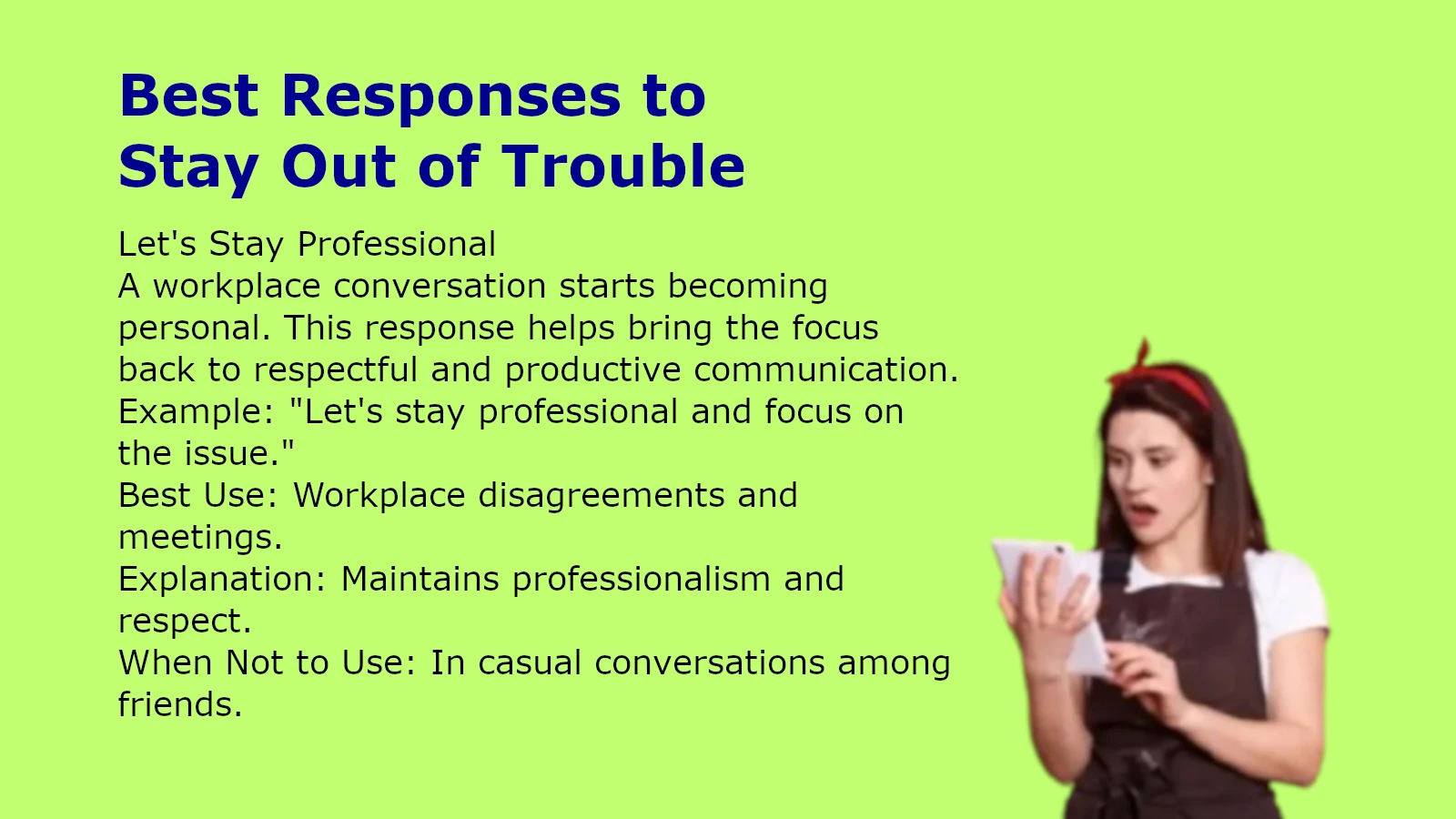
Let’s Stay Professional
A workplace conversation starts becoming personal. This response helps bring the focus back to respectful and productive communication.
Example: “Let’s stay professional and focus on the issue.”
Best Use: Workplace disagreements and meetings.
Explanation: Maintains professionalism and respect.
When Not to Use: In casual conversations among friends.
Conclusion
Mastering these 47 best responses to stay out of trouble can improve your communication skills, strengthen relationships, and help you handle difficult situations with confidence. The most effective responses are respectful, calm, and solution-focused. Whether you’re dealing with workplace challenges, family disagreements, customer complaints, or social misunderstandings, these phrases can help you avoid unnecessary conflict while maintaining credibility and trust. By practicing thoughtful communication, you’ll be better prepared to navigate challenging conversations and create positive outcomes.