Clever Responses to Fancy Seeing You Here often start with the idea that when you hear fancy seeing you here, it can create an awkward moment in a conversation. To begin with, this phrase usually appears in an unexpected situation, where people meet suddenly in a social space. As a result, it brings a mix of surprise and light confusion, especially when the interaction is not planned.
Moreover, the phrase is commonly used when people meet unexpectedly, and it can quickly change the tone of the meeting. In many cases, this shift depends on how the interaction flows between individuals. Therefore, it is important to understand that such moments are part of natural social communication, not something unusual.
Finally, the meaning of this phrase always depends on context, and it changes based on professional or casual settings. In other words, your response should match the situation, whether you want to stay formal or relaxed. Consequently, with a better understanding, you can handle the moment smoothly and find more natural ways to reply without overthinking.
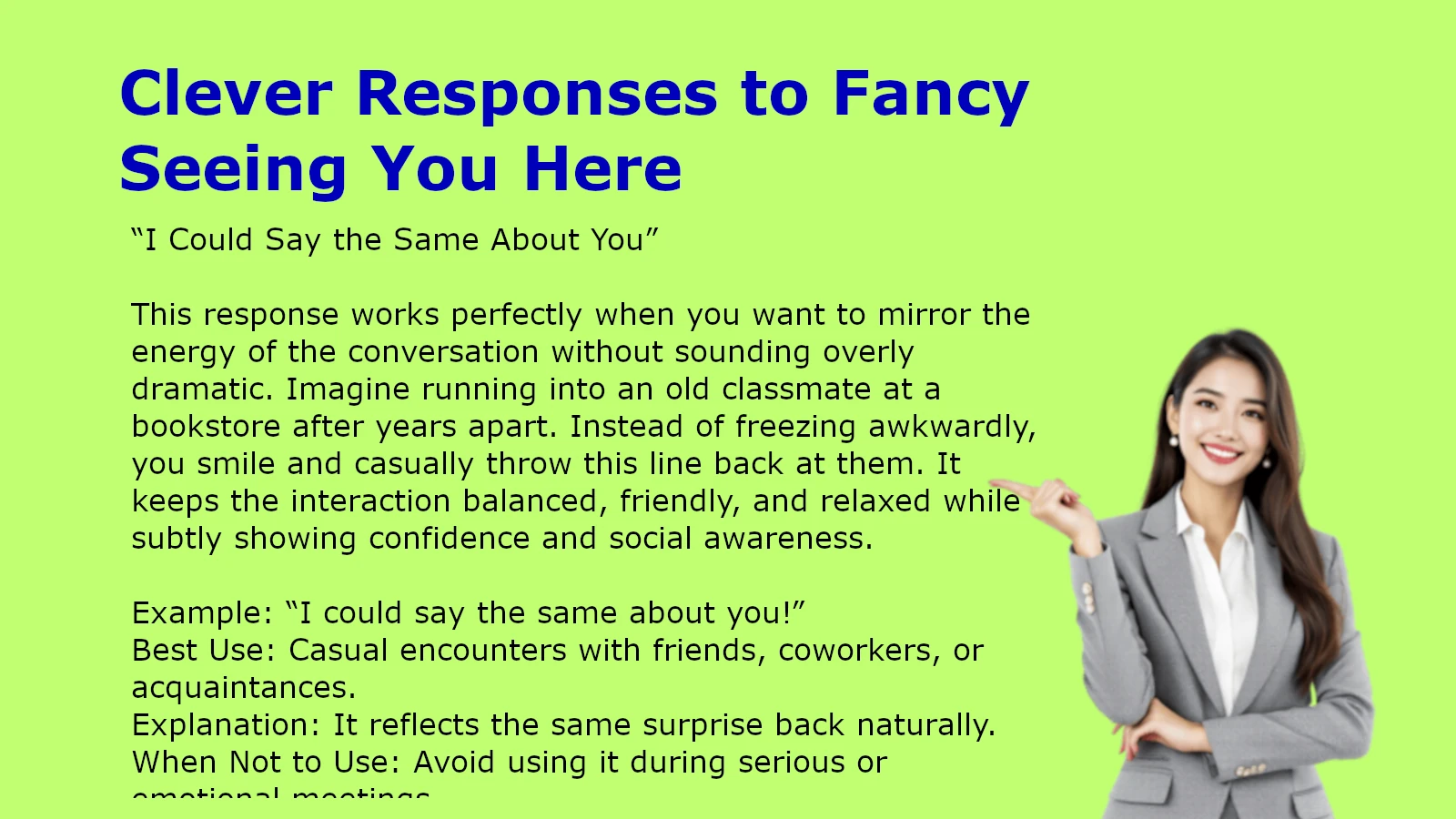
1. “I Could Say the Same About You”
This response works perfectly when you want to mirror the energy of the conversation without sounding overly dramatic. Imagine running into an old classmate at a bookstore after years apart. Instead of freezing awkwardly, you smile and casually throw this line back at them. It keeps the interaction balanced, friendly, and relaxed while subtly showing confidence and social awareness.
Example: “I could say the same about you!”
Best Use: Casual encounters with friends, coworkers, or acquaintances.
Explanation: It reflects the same surprise back naturally.
When Not to Use: Avoid using it during serious or emotional meetings.
2. “Looks Like Great Minds Think Alike”
This witty comeback adds intelligence and humor to the interaction. Picture bumping into a coworker at a coffee shop both trying the newest seasonal drink. This line instantly creates connection and makes the conversation feel warm and clever. It’s especially effective when both people share similar interests or habits.
Example: “Looks like great minds think alike.”
Best Use: Friendly or professional environments.
Explanation: Suggests shared taste or smart decision-making.
When Not to Use: Don’t use it if the mood is tense or competitive.
3. “You Must Be Following Me”
A playful and teasing response can turn a simple greeting into a memorable exchange. Imagine seeing a friend at multiple places in one week. Saying this with a grin makes the interaction humorous and lighthearted without sounding serious. It keeps the conversation energetic and socially engaging.
Example: “You must be following me at this point.”
Best Use: Close friends or playful relationships.
Explanation: Adds teasing humor to the moment.
When Not to Use: Avoid with strangers who may misunderstand sarcasm.
4. “Either We Have Excellent Taste or Terrible Timing”
This response mixes sarcasm with intelligence, making it ideal for witty personalities. Imagine both of you arriving late to an event and unexpectedly meeting near the entrance. This clever line instantly breaks awkwardness while encouraging laughter and further conversation.
Example: “Either we have excellent taste or terrible timing.”
Best Use: Social gatherings and casual meetups.
Explanation: Creates humor through contrast.
When Not to Use: Don’t use during formal business situations.
5. “Guess the Universe Wanted This Meeting”
Sometimes adding a slightly dramatic touch can make your response unforgettable. Imagine unexpectedly seeing someone during a stressful travel day. This line introduces humor while sounding thoughtful and conversational at the same time.
Example: “Guess the universe wanted this meeting.”
Best Use: Friendly or slightly flirty encounters.
Explanation: Makes coincidence sound meaningful.
When Not to Use: Avoid if the other person dislikes dramatic humor.
6. “Caught Me Red-Handed”
This funny response works well when you are doing something embarrassing or unexpected. Imagine a coworker seeing you buying an excessive amount of snacks after you claimed you were dieting. The humor immediately softens the moment and keeps the conversation entertaining.
Example: “Caught me red-handed.”
Best Use: Embarrassing or funny situations.
Explanation: Acknowledges the moment humorously.
When Not to Use: Don’t use during serious professional interactions.
7. “I Was Just About to Say the Same Thing”
This conversational response feels smooth and natural. Picture unexpectedly meeting an old friend at the airport. Instead of pausing awkwardly, this line keeps the momentum going while showing social confidence and friendliness.
Example: “I was just about to say the same thing.”
Best Use: Neutral or casual conversations.
Explanation: Maintains conversational flow naturally.
When Not to Use: Avoid overusing it repeatedly.
8. “This Place Clearly Attracts Awesome People”
Adding confidence and positivity makes interactions memorable. Imagine seeing a friend at a trendy restaurant. This response instantly creates good energy and often earns a laugh or compliment back.
Example: “This place clearly attracts awesome people.”
Best Use: Friendly social settings.
Explanation: Compliments both parties indirectly.
When Not to Use: Avoid if you want to sound serious or professional.
9. “Small World, Isn’t It?”
This timeless classic works because it feels genuine and universally relatable. Imagine unexpectedly seeing a former colleague while traveling abroad. The phrase naturally expresses surprise while inviting further conversation.
Example: “Small world, isn’t it?”
Best Use: Unexpected reunions.
Explanation: Highlights coincidence naturally.
When Not to Use: Avoid if you want a more unique or humorous response.
10. “You’re Everywhere These Days”
This playful remark adds energy and familiarity to the exchange. Imagine repeatedly bumping into the same gym friend across different places in town. It feels conversational, friendly, and engaging.
Example: “You’re everywhere these days.”
Best Use: Frequent accidental encounters.
Explanation: Suggests amusing coincidence.
When Not to Use: Avoid with someone who may take it literally.
11. “Well, This Just Made My Day Interesting”
This response turns an ordinary moment into something exciting. Imagine seeing someone unexpectedly at a concert or shopping mall. It instantly communicates positive surprise and keeps the conversation upbeat.
Example: “Well, this just made my day interesting.”
Best Use: Positive social interactions.
Explanation: Shows enthusiasm without sounding forced.
When Not to Use: Avoid during negative or stressful situations.
12. “Should I Be Concerned?”
A sarcastic and funny reply can create instant laughter among friends. Imagine a friend constantly appearing wherever you go during the weekend. This line works especially well with playful personalities.
Example: “Should I be concerned?”
Best Use: Humor-filled friendships.
Explanation: Uses mock suspicion for comedy.
When Not to Use: Avoid with strangers or formal contacts.
13. “Clearly, We’re on the Same Wavelength”
This response sounds thoughtful and socially intelligent. Imagine meeting a coworker at the exact same seminar or event unexpectedly. It creates connection while sounding polished and conversational.
Example: “Clearly, we’re on the same wavelength.”
Best Use: Professional or intellectual conversations.
Explanation: Implies shared interests or thinking.
When Not to Use: Don’t use if the situation is awkward.
14. “I Promise This Isn’t Planned”
This funny line is perfect when repeated encounters start becoming suspiciously frequent. It keeps the mood light and humorous while reducing awkwardness.
Example: “I promise this isn’t planned.”
Best Use: Repeated accidental meetings.
Explanation: Jokes about coincidence.
When Not to Use: Avoid in serious professional settings.
15. “Now the Party Can Officially Start”
This confident and charming response makes the other person feel welcomed and valued. Imagine arriving late to a gathering and running into someone you know. The energy instantly becomes more social and positive.
Example: “Now the party can officially start.”
Best Use: Parties and social gatherings.
Explanation: Adds charisma and confidence.
When Not to Use: Avoid if the environment is formal.
16. “I Guess We’re Destined to Cross Paths”
This line adds playful mystery to the interaction. Imagine repeatedly meeting someone during a vacation trip. It creates intrigue while remaining lighthearted and conversational.
Example: “I guess we’re destined to cross paths.”
Best Use: Flirty or friendly conversations.
Explanation: Makes coincidence sound meaningful.
When Not to Use: Avoid if the person dislikes romantic humor.
17. “You Found Me Again”
This short and funny reply works especially well among close friends. It creates playful energy and keeps the conversation flowing naturally.
Example: “You found me again.”
Best Use: Casual recurring meetings.
Explanation: Sounds humorous and relaxed.
When Not to Use: Avoid in professional networking events.
18. “This Is Either Fate or Really Bad Hiding Skills”
This response combines creativity with sarcasm. Imagine seeing someone unexpectedly at multiple locations in a single day. It instantly turns coincidence into comedy.
Example: “This is either fate or really bad hiding skills.”
Best Use: Funny and energetic conversations.
Explanation: Blends humor with imagination.
When Not to Use: Avoid during serious conversations.
19. “You’ve Officially Upgraded My Day”
A warm and positive response can instantly strengthen social connections. Imagine unexpectedly seeing a good friend after a stressful week. This line communicates appreciation naturally.
Example: “You’ve officially upgraded my day.”
Best Use: Friends or people you enjoy seeing.
Explanation: Makes the other person feel valued.
When Not to Use: Avoid with someone you barely know.
20. “I Knew This Day Was Missing Something”
This response sounds thoughtful while remaining playful. It’s especially useful in friendly or flirty situations where you want to sound charming without overdoing it.
Example: “I knew this day was missing something.”
Best Use: Flirty or cheerful interactions.
Explanation: Suggests the meeting improved the day.
When Not to Use: Avoid in workplace-only conversations.
21. “You Just Can’t Stay Away, Can You?”
Teasing responses often make conversations more engaging. Imagine seeing a friend at several events throughout the month. This line creates playful tension and humor naturally.
Example: “You just can’t stay away, can you?”
Best Use: Close friendships or playful relationships.
Explanation: Adds light teasing to the moment.
When Not to Use: Avoid with people sensitive to sarcasm.
22. “Funny Running Into You Here”
This simple but effective response works in nearly every setting. Imagine meeting a former classmate at a random café while traveling. It sounds natural and welcoming without trying too hard.
Example: “Funny running into you here.”
Best Use: Universal casual interactions.
Explanation: Easy and socially safe response.
When Not to Use: Rarely inappropriate unless the moment is serious.
23. “I Should Start Charging Appearance Fees”
This bold and humorous response instantly grabs attention. Imagine unexpectedly seeing friends repeatedly at social events. It keeps the atmosphere entertaining and memorable.
Example: “I should start charging appearance fees.”
Best Use: Social groups and humorous settings.
Explanation: Uses exaggerated confidence for comedy.
When Not to Use: Avoid if the audience dislikes bold humor.
24. “Clearly, We Have the Same Excellent Habits”
This response works beautifully when both people share routines or interests. Imagine running into someone regularly at the gym or favorite café. It creates a sense of connection and familiarity.
Example: “Clearly, we have the same excellent habits.”
Best Use: Shared-interest environments.
Explanation: Highlights common behavior positively.
When Not to Use: Avoid if the situation is competitive.
25. “And Here I Thought I’d Have a Quiet Day”
Ending with humor can make even unexpected encounters enjoyable. Imagine peacefully shopping when someone suddenly recognizes you. This response keeps things light while inviting conversation.
Example: “And here I thought I’d have a quiet day.”
Best Use: Unexpected social meetings.
Explanation: Adds humor without sounding rude.
When Not to Use: Avoid if the person may feel unwelcome.
26. “What a Pleasant Surprise This Is”
This calm and warm response works beautifully when you genuinely feel happy about the unexpected meeting. Imagine running into an old neighbor at a peaceful park after years. Instead of awkward silence, this line naturally creates a welcoming atmosphere. It softens the surprise and helps both people ease into conversation without pressure or confusion.
Example: “What a pleasant surprise this is.”
Best Use: Friendly reunions and calm environments.
Explanation: Expresses genuine positivity and openness.
When Not to Use: Avoid if the situation feels tense or formal.
27. “I Was Just Thinking About You”
This response creates an instant emotional connection and can feel very engaging. Imagine seeing a friend right after remembering an old shared memory. It adds a sense of coincidence mixed with personal meaning, making the conversation feel deeper and more connected.
Example: “I was just thinking about you.”
Best Use: Close friends or meaningful relationships.
Explanation: Builds emotional engagement and curiosity.
When Not to Use: Avoid using it if it isn’t true.
28. “The Timing Couldn’t Be More Perfect”
This clever response adds a sense of destiny or perfect timing. Imagine bumping into someone right when you needed advice or support. It turns an ordinary encounter into something meaningful and slightly dramatic in a positive way.
Example: “The timing couldn’t be more perfect.”
Best Use: Positive or helpful encounters.
Explanation: Suggests coincidence has value.
When Not to Use: Avoid in neutral or random situations.
29. “You Keep Appearing Like Magic”
This playful and slightly whimsical line works well among friends. Imagine seeing the same person multiple times across different places in a week. It adds humor and imagination, making the interaction feel light and entertaining.
Example: “You keep appearing like magic.”
Best Use: Repeated casual encounters.
Explanation: Adds playful exaggeration.
When Not to Use: Avoid with serious or formal individuals.
30. “Are We Stuck in a Loop?”
This humorous and slightly dramatic response is great for repeated meetings. Imagine running into the same colleague multiple times in one day. It turns coincidence into a funny situation and keeps the mood light.
Example: “Are we stuck in a loop?”
Best Use: Frequent accidental meetings.
Explanation: Uses humor to highlight repetition.
When Not to Use: Avoid in professional formal contexts.
31. “This Must Be a Sign”
This response adds a touch of mystery and curiosity. Imagine unexpectedly meeting someone you were planning to reconnect with anyway. It creates conversational depth and opens the door for further discussion.
Example: “This must be a sign.”
Best Use: Flirty or meaningful conversations.
Explanation: Suggests deeper meaning in coincidence.
When Not to Use: Avoid if you want to stay strictly professional.
32. “Well, That Was Unexpected”
A simple and natural reaction that works in almost any situation. Imagine seeing an old friend at a grocery store while traveling. It keeps things honest and easygoing without forcing humor or complexity.
Example: “Well, that was unexpected.”
Best Use: Neutral social situations.
Explanation: Straightforward acknowledgment of surprise.
When Not to Use: Rarely inappropriate.
33. “You Have Good Timing”
This response highlights the moment in a positive way. Imagine someone showing up just when you were about to leave an event. It adds appreciation while keeping the tone light and conversational.
Example: “You have good timing.”
Best Use: Friendly or helpful situations.
Explanation: Compliments timing in a subtle way.
When Not to Use: Avoid in awkward or negative meetings.
34. “I Think We’re Becoming Regulars Here”
This humorous response works well when you keep meeting the same person in one location. Imagine bumping into a friend every weekend at the same café. It builds familiarity and shared experience naturally.
Example: “I think we’re becoming regulars here.”
Best Use: Frequent shared locations.
Explanation: Highlights repetition with humor.
When Not to Use: Avoid in formal environments.
35. “This Feels Like a Movie Scene”
This creative response adds imagination and charm to the conversation. Imagine unexpectedly meeting someone during a sunset or emotional moment. It makes the encounter feel special and memorable.
Example: “This feels like a movie scene.”
Best Use: Emotional or scenic moments.
Explanation: Adds dramatic storytelling tone.
When Not to Use: Avoid in serious or professional contexts.
36. “You Just Made This Place Better”
This warm and friendly response shows appreciation for the other person’s presence. Imagine meeting a friend during a boring or tiring day. This line instantly creates positivity and connection.
Example: “You just made this place better.”
Best Use: Friendly or supportive relationships.
Explanation: Expresses appreciation and warmth.
When Not to Use: Avoid if the relationship is formal.
37. “Now I Know Why I Came Here”
This clever response gives meaning to the encounter. Imagine running into someone unexpectedly at an event you almost skipped. It adds humor and emotional connection to the moment.
Example: “Now I know why I came here.”
Best Use: Positive and meaningful meetings.
Explanation: Suggests purpose in coincidence.
When Not to Use: Avoid if it sounds overly dramatic.
38. “You’re Becoming a Familiar Face”
This friendly response works when encounters are becoming frequent. Imagine seeing the same person regularly at your local gym or café. It builds comfort and familiarity in a natural way.
Example: “You’re becoming a familiar face.”
Best Use: Repeated casual meetings.
Explanation: Highlights growing familiarity.
When Not to Use: Avoid with strangers.
39. “This Day Just Got More Interesting”
This upbeat response adds energy to the moment. Imagine a dull day suddenly becoming exciting after meeting someone unexpectedly. It keeps the conversation positive and engaging.
Example: “This day just got more interesting.”
Best Use: Casual and friendly situations.
Explanation: Adds excitement and positivity.
When Not to Use: Avoid in serious discussions.
40. “Did We Plan This Without Knowing?”
This playful and humorous response creates a sense of shared coincidence. Imagine repeatedly running into someone in different parts of town. It turns randomness into a joke.
Example: “Did we plan this without knowing?”
Best Use: Repeated encounters.
Explanation: Jokes about coincidence.
When Not to Use: Avoid in formal environments.
41. “You Keep Surprising Me”
This simple yet expressive response works well in friendly conversations. Imagine meeting someone unexpectedly after not seeing them for a long time. It keeps the tone natural and engaging.
Example: “You keep surprising me.”
Best Use: Casual friendly meetings.
Explanation: Shows mild surprise and interest.
When Not to Use: Avoid if tone might seem sarcastic.
42. “Guess We Share the Same Habits”
This response highlights similarity in lifestyle or routine. Imagine meeting someone regularly at the same morning café or bookstore. It creates a sense of connection and shared behavior.
Example: “Guess we share the same habits.”
Best Use: Routine-based encounters.
Explanation: Suggests common lifestyle patterns.
When Not to Use: Avoid in one-time meetings.
43. “This Is Getting Suspiciously Frequent”
This humorous response works when repeated meetings feel too coincidental. Imagine bumping into someone three times in one week. It turns repetition into comedy naturally.
Example: “This is getting suspiciously frequent.”
Best Use: Repeated encounters.
Explanation: Adds playful suspicion.
When Not to Use: Avoid in formal settings.
44. “You’re a Constant in My Day Now”
This thoughtful and slightly emotional response works well among close friends. Imagine seeing someone regularly during your daily routine. It expresses familiarity and comfort.
Example: “You’re a constant in my day now.”
Best Use: Close relationships.
Explanation: Expresses consistent presence.
When Not to Use: Avoid with strangers.
45. “I Think This Counts as Tradition Now”
This playful response works when meetings become recurring. Imagine seeing the same friend every Friday at the same café. It turns repetition into a lighthearted tradition.
Example: “I think this counts as tradition now.”
Best Use: Repeated social routines.
Explanation: Adds humor to consistency.
When Not to Use: Avoid in professional contexts.
46. “You’re Officially Part of My Day”
This warm and friendly response builds emotional connection. Imagine seeing a friend unexpectedly during your daily errands. It creates positivity and familiarity.
Example: “You’re officially part of my day.”
Best Use: Friendly relationships.
Explanation: Expresses appreciation.
When Not to Use: Avoid in formal situations.
47. “Well, This Was Meant to Happen”
This final response adds a touch of destiny and positivity. Imagine meeting someone unexpectedly at a moment that feels significant. It creates a meaningful and memorable ending to the interaction.
Example: “Well, this was meant to happen.”
Best Use: Emotional or flirty situations.
Explanation: Suggests meaningful coincidence.
When Not to Use: Avoid in strictly professional settings.
FAQs
What is the best overall response to “Fancy seeing you here”?
The best response depends on the situation, but “Small world, isn’t it?” works well in almost all contexts.
Can I use humorous responses with strangers?
It’s better to avoid strong sarcasm or teasing with strangers and stick to polite or neutral replies.
Are flirty responses appropriate in this list?
Yes, but only when the relationship and environment support a friendly or romantic tone.
How can I sound more natural when replying?
Choose responses that match your personality and avoid overthinking the moment.
Why are clever responses useful in conversation?
They help reduce awkwardness, improve confidence, and make social interactions more memorable.
Conclusion
Mastering clever responses to “Fancy seeing you here” helps you handle unexpected social moments with confidence, humor, and charm. From playful sarcasm to warm appreciation and witty observations, these 47 responses give you flexibility in any situation. The key is to match your tone with the context and relationship, ensuring your reply feels natural and engaging. With these expressions, every unexpected meeting becomes an opportunity to create a memorable conversation.